
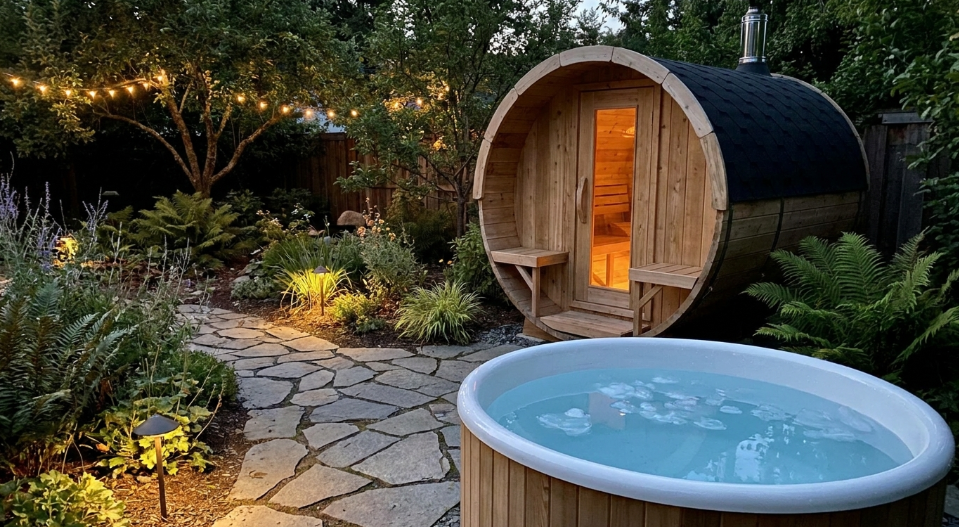
What to Put a Sauna On: Pads, Decks, and Gravel
Gravel, pavers, composite decking, and poured concrete all work as a sauna base, and the right choice depends on cabin size, soil drainage, and budget. A compacted gravel bed 4 to 6 inches deep is the most common and least expensive option for smaller units. Larger or heavier cabins, and sites with poor drainage, generally benefit from a concrete pad. Bare grass or dirt is the one option worth avoiding.
Why does the base matter as much as the sauna itself?
A sauna cabin is built to handle extreme heat inside and moisture from steam and sweat, but the bottom of the structure sits in the same outdoor conditions as a garden shed. Wood in contact with wet ground rots faster than almost anything else that shortens a cabin’s lifespan. A stable, well-draining base keeps rainwater and snowmelt from pooling under the floor, keeps the structure level so doors and vents seal properly, and reduces the settling and shifting that can crack a foundation or throw a heater’s clearance out of code over a few seasons.
Why gravel is the most popular choice
Compacted crushed gravel, not smooth pea gravel, gives you drainage and stability at the lowest material cost of the common options. A typical install is 4 to 6 inches of compacted base material, extending several inches past the cabin footprint so rain sheds away from the walls instead of pooling against them. Gravel handles freeze-thaw cycles better than a rigid pad in many climates, since it can shift slightly without cracking. The tradeoff is that gravel needs to be properly compacted, not just poured and leveled by eye, or the cabin can settle unevenly within a year or two.
Why some owners choose pavers or composite decking instead
Pavers give you gravel’s drainage benefits with a flatter, more finished surface that is easier to walk on barefoot after a hot session, which matters more than people expect the first time they step onto sharp gravel with wet feet. Composite decking is popular for saunas built as part of a larger patio or pool deck, since it matches surrounding materials and most residential decks are rated to support a small to mid-size cabin without modification. The main consideration with decking is checking joist spacing and load rating before installation, particularly for larger traditional cabins with a heavy heater and stone load, since undersized framing is a safety issue, not just a cosmetic one.
When does a concrete pad make sense?
Concrete costs more upfront, often several times what a gravel base runs, but it offers the flattest, most permanent, and most weight-tolerant surface of the three. It is the right call for larger family-size cabins, sites with clay soil that holds water and shifts seasonally, or anywhere local frost heave is a known problem. Concrete also simplifies electrical conduit runs for a 240V heater circuit, since conduit can be embedded or run along a flat, predictable surface rather than through shifting gravel. The downside beyond cost is permanence. Once poured, moving the sauna later means dealing with an existing slab, which is a real consideration if you are not sure yet where on the property you want it long term.
Before settling on a base, it helps to know the footprint and weight of the cabin you are planning around, since that determines whether gravel is sufficient or concrete is worth the extra cost. For sizing details and current cabin dimensions across styles, the team at SweatDecks publishes specs next to each model that make this comparison easier before you break ground.
How does surface choice affect long-term safety?
An unstable or poorly draining base is more than a cosmetic problem. A cabin that settles unevenly can pull door seals out of alignment, letting heat and moisture escape where they should not, and can shift electrical conduit or disconnect boxes out of their intended clearance from the structure. Standing water under or against a wood cabin also raises long-term mold and rot risk, which is a health and structural issue at the same time. None of this requires the most expensive option. It requires a base that is properly built for the conditions on your specific property, which is often gravel done correctly rather than concrete done as a default.
Does the base affect the actual sauna experience?
Slightly, and mostly in comfort terms rather than performance. A paver or composite surface feels better underfoot when you step out to cool down between rounds, especially barefoot. A level, well-drained base also keeps the door swinging and sealing correctly, which affects how efficiently the heater holds temperature. The core wellness case for sauna use itself, meanwhile, does not depend on what is underneath it. A Mayo Clinic Proceedings review of sauna research found regular use associated with a range of cardiovascular and general health markers, and a Cleveland Clinic overview of home sauna use covers similar ground for a general audience. These associations hold regardless of whether the cabin sits on gravel, pavers, or a poured pad, since they are about heat exposure, not foundation material.
Frequently Asked Questions
Can you put a sauna directly on grass or dirt?
It is not recommended long term. Grass and bare dirt hold moisture against the base, which speeds up wood rot and creates an uneven surface that shifts with rain and frost. A gravel, paver, or concrete base is a better foundation even for a short-term setup.
Does a sauna need a concrete pad?
Not always. A well-built gravel or paver base handles most home saunas fine, especially smaller cabins. Concrete is worth it for larger, heavier units or if your soil drains poorly and shifts seasonally, since concrete resists movement better than loose material.
How much gravel do you need under a sauna?
A compacted gravel base is typically 4 to 6 inches deep, extending a few inches beyond the cabin’s footprint on all sides for drainage. Crushed stone that compacts well, rather than smooth rounded pea gravel, gives a more stable surface.
Do I need a permit to install a base for a sauna?
It depends on your municipality and whether the sauna is considered a permanent structure. Concrete pads and electrical work more often trigger permit requirements than a simple gravel or paver base, so check local rules before pouring anything.
Can a composite deck support the weight of a sauna?
Most residential decks built to standard code can support a small to mid-size cabin sauna, but it is worth confirming joist spacing and load capacity with a contractor first, especially for larger units or older decks.
References
- Cardiovascular and Other Health Benefits of Sauna Bathing: A Review of the Evidence, Mayo Clinic Proceedings, 2018
- Does the Combination of Finnish Sauna Bathing and Other Lifestyle Factors Confer Additional Health Benefits? A Review of the Evidence, Mayo Clinic Proceedings, 2023
- Clinical Effects of Regular Dry Sauna Bathing: A Systematic Review, Evidence-Based Complementary and Alternative Medicine, 2018